
Award-Winning Wildlife Photography Tips for Your 2026 Expedition
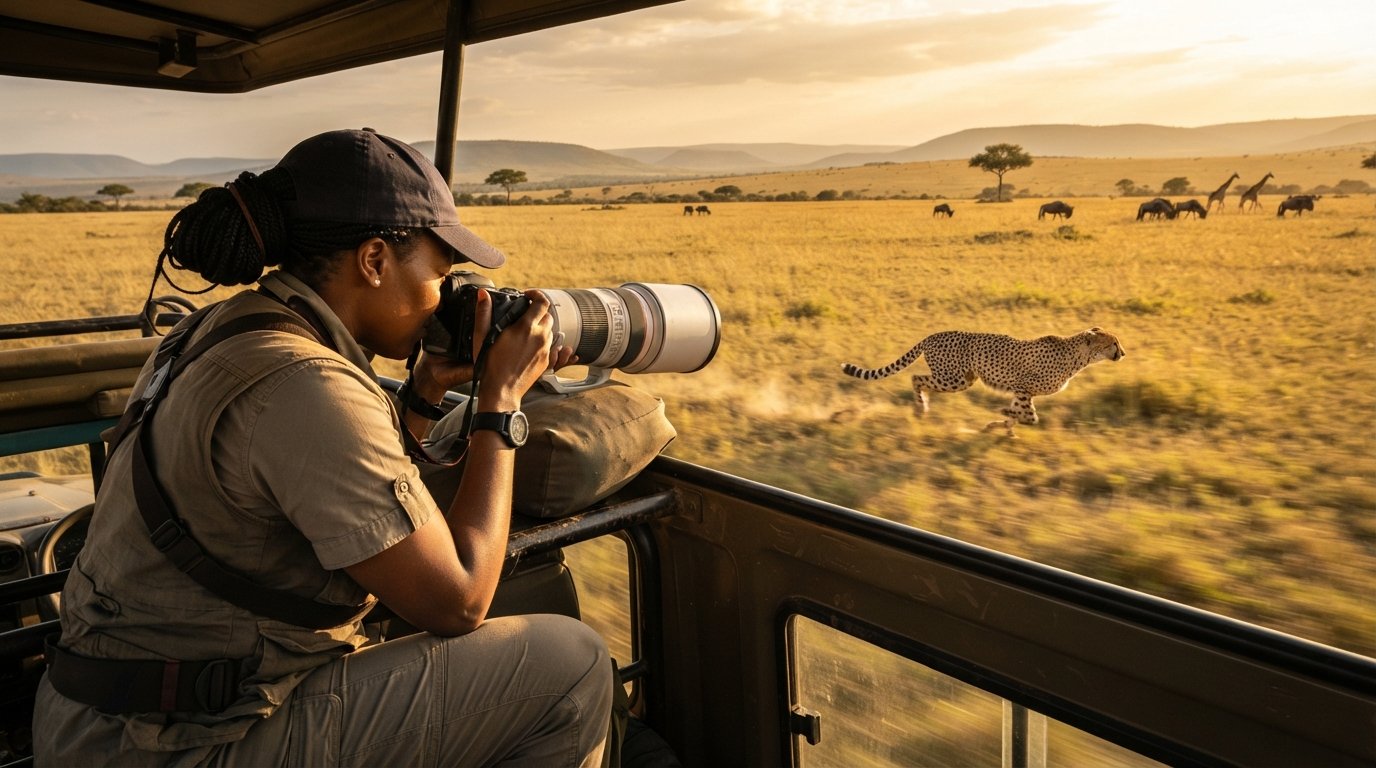

Most people think a five-figure lens is the only way to win a photography contest, but the real secret is much simpler. It's incredibly frustrating to travel across the globe only to end up with blurry shots or gear that won't behave when a leopard finally jumps from a tree. We know you want to feel confident using proven wildlife photography expedition tips to create a portfolio you're actually proud to show off.
In this guide, you'll learn the practical secrets and expert techniques professionals use to capture stunning, award-worthy images. We'll look at how to stop missing the action and start taking sharp, professional photos on your next big adventure in 2026. You'll gain the skills needed to master your camera and nail the perfect composition every single time.
Success starts long before you reach the savannah or the rainforest. One of the most helpful wildlife photography expedition tips is to keep your gear simple and reliable. You don't want to be fumbling with a complicated setup while a lion is yawning or a rare bird takes flight. Spend time practicing at home until your camera settings feel like second nature. It's much better to have a patience-first mindset than a bag full of gadgets you don't know how to use.
Wildlife doesn't follow a script. You might wait for hours for a single interaction, like a cheetah beginning its hunt or a cub playing with its mother. This is where your mindset makes the difference. If you're stressed about your camera, you'll miss the subtle signals that an animal is about to move. Mastering these wildlife photography expedition tips helps you stay present in the moment. Knowing your gear inside and out is more important than having the newest model on the market.
Packing light doesn't mean missing out on great shots. Stick to versatile lenses, like a 100-400mm, which gives you the flexibility to zoom in on a distant bird or pull back for a wider animal portrait. Always pack more extra batteries and memory cards than you think you'll need. You will take more photos than you imagine when the action starts. If you're just starting out, check out these wildlife photography tips for beginners for base-level gear advice. Keeping your kit organized helps you stay focused on the beauty around you rather than digging through a messy bag.
Once you're out in the wild, things happen quickly. You've prepared your gear, but now it's time to nail the shot. One of the most vital wildlife photography expedition tips is to keep your shutter speed high. Whether it's a bird taking flight or a cub wrestling, a fast shutter freezes that split-second action, keeping your images crisp and clear instead of blurry.
Always aim your focus point right on the animal's eyes. It's the easiest way to create a real connection between the viewer and the subject. While you're at it, take a quick peek at the background. A beautiful lion portrait can be ruined by a distracting branch that looks like it's growing out of the cat's head. You can see these techniques in action on our Scheduled Departure Photography Tours, where experts help you refine your timing.
Good composition turns a snapshot into a piece of art. Start by using the rule of thirds. Instead of sticking your subject right in the middle, place them slightly off-center. This makes the photo feel more balanced and professional. Next, try to get down to eye level with the animal. Shooting from a low angle makes the viewer feel like they're part of the animal's world, creating a much more intimate feel.
Don't forget to leave "active space" in your frame. If an animal is looking or walking to the left, leave more room on that side of the image. This gives the subject space to "move" into, making the shot feel natural. Applying these wildlife photography expedition tips takes practice, but the results are worth it. If you want to try these out with a group of like-minded people, our Scheduled Tours offer the perfect environment to learn.
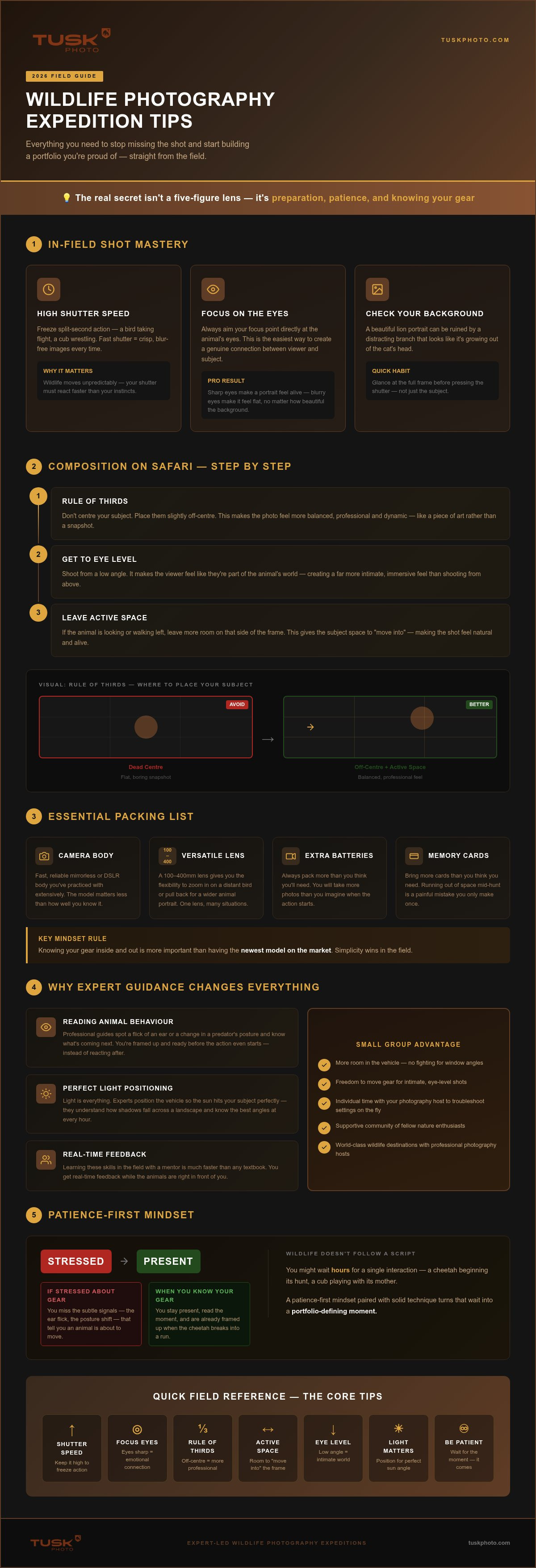
Having the best gear is great, but being in the right spot is even better. Professional guides are masters at reading animal behavior. They can see a flick of an ear or a change in a predator's posture and know exactly what's coming next. This foresight is one of the top wildlife photography expedition tips because it puts you ahead of the action. Instead of reacting to a jump, you're already framed up and ready to click.
Light is everything in photography. An expert guide knows how to position the vehicle so the sun hits your subject perfectly. They understand how shadows fall across a landscape and where the best angles are. Learning these skills in the field with a mentor is much faster than reading any textbook. You get real-time feedback while the animals are right in front of you. Check out Tusk Photo’s upcoming tours to find a mentored expedition that fits your goals.
Traveling in a small group makes a huge difference for your portfolio. It means there's more room in the vehicle, so you aren't fighting for a window or a specific angle. You have the freedom to move your gear and get that intimate, eye-level shot. You also get plenty of individual time with your photography host to troubleshoot tricky settings on the fly. To see how these small-group dynamics work in diverse locations like India and Nepal, you can learn more about India Safaris and their expert-led tours.
It's also about the community. You'll share tips and stories with fellow enthusiasts who love nature as much as you do. These connections make the journey even more special. Applying these wildlife photography expedition tips in a supportive environment ensures you come home with a portfolio that truly stands out.
Capturing award-winning images is all about being prepared and staying patient in the field. By simplifying your gear and mastering your camera settings before you leave, you can focus on what really matters: the animals. Remember to keep your shutter speed high and focus on the eyes to create that emotional spark. Using these wildlife photography expedition tips will help you turn your 2026 journey into a portfolio-building success.
If you're ready to take your skills to the next level, we're here to help. Our expeditions are led by professional photography hosts who ensure you get the best light and angles. We keep our groups small for personalized learning at world-class wildlife destinations. Join a Tusk Photo expedition and capture your best images yet! We can't wait to see the incredible shots you'll take on your next journey.
The best camera for your journey is a fast, reliable mirrorless or DSLR body that you've practiced with extensively. You don't need the most expensive model, but a camera with a good burst mode helps you capture quick movements. Pair it with a versatile zoom lens so you can react to changing scenes without swapping gear in the middle of the action.
Keeping gear clean starts with using a simple rain cover or a dry bag to block out dust and moisture. Carry a small blower brush and a clean microfiber cloth to wipe your lens regularly throughout the day. It's a good habit to store your camera in its bag whenever you aren't actively looking for a shot to prevent unnecessary exposure.
Most photographers find a beanbag or a monopod much more useful than a tripod while inside a safari vehicle. Tripods take up too much floor space and can be difficult to set up quickly when an animal appears. A beanbag sits perfectly on the vehicle's edge, giving you a steady base for those essential wildlife photography expedition tips on stable shooting.
The best way to capture natural shots is to stay quiet and keep a respectful distance using a long telephoto lens. Avoid making sudden movements or loud noises that might startle your subject. Following these wildlife photography expedition tips ensures the animals stay relaxed, which allows you to photograph their authentic behaviors and social interactions without causing any stress to the environment.


