
Alaska Bear Viewing Photography Tour: A Practical Field Guide
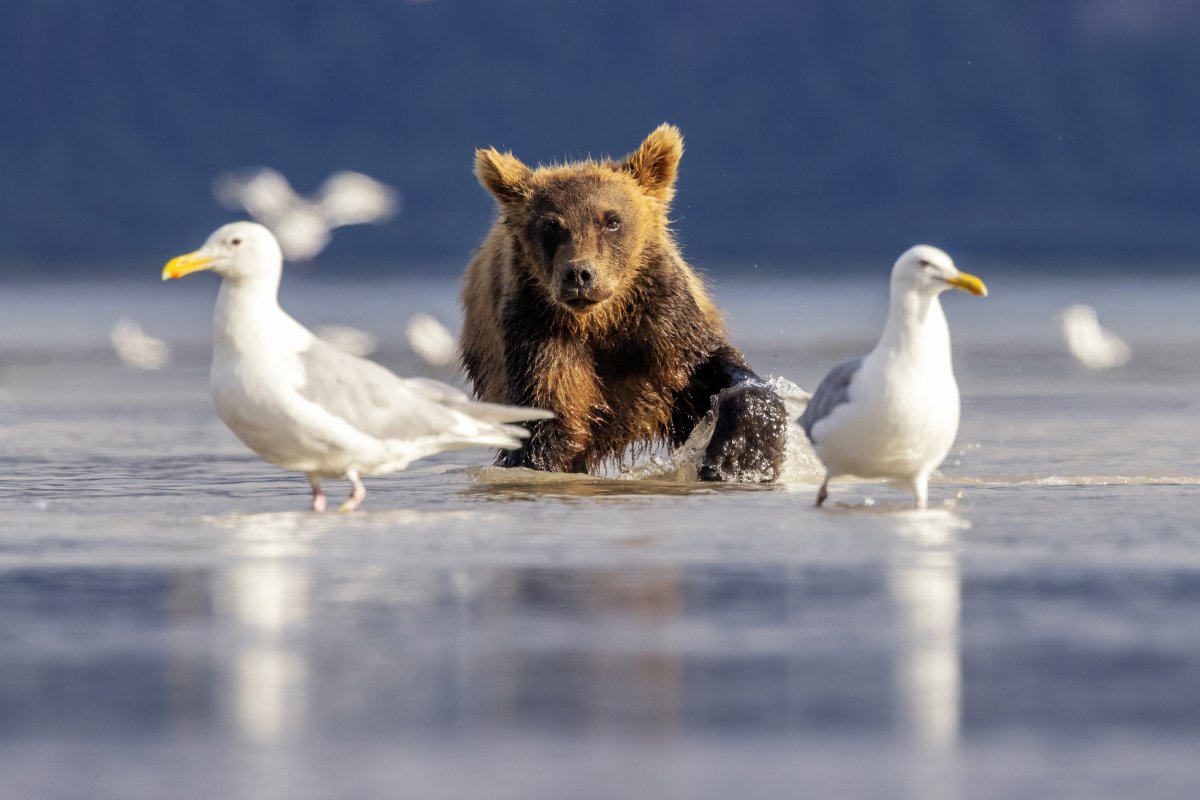

What if your strongest bear photographs begin before you lift the camera? On an Alaska bear viewing photography tour, patience and thoughtful field decisions matter as much as camera settings. The landscape, light, weather, and bear activity can all change, so it helps to know what to pack and how to respond when a scene unfolds differently than you expected.
This guide covers practical ways to prepare your camera kit, make choices in the field, and choose a guided journey that fits your experience and goals. You’ll also learn how scheduled, tailor-made, and on-demand tours differ, and how an experienced photography guide can support you as conditions change.
Bear-viewing photography means observing wild bears and making images without controlling the encounter. You can choose where to stand, how to frame a scene, and when to press the shutter, but the bears set the pace. A thoughtful Alaska bear viewing photography tour leaves room for patience and careful decisions rather than treating wildlife as a staged subject.
Habitat, season, weather, and animal behavior all influence what you might see. Salmon-rich waters may draw bears to feed, while coastal meadows and shorelines offer very different settings. Salmon runs begin in summer, and fall brings changing colors. Cloud, rain, and shifting light can affect exposure and contrast, so be ready to adapt your approach rather than rely on one planned shot.
Bear activity and viewing conditions can vary from one day to the next. Build flexibility into your expectations and give each scene time to develop.
Coastal brown bears live among shorelines, streams, meadows, and salmon-rich ecosystems. Katmai National Park and Lake Clark National Park are examples of Alaska destinations known for these landscapes, though their mention does not promise a particular route or encounter. The setting helps shape the story a photograph can tell.
Look beyond the bear itself. Light brings out texture and color; distance determines how much habitat fits in the frame; and the background can either add context or compete for attention. A bear fishing beside moving water creates a different image from one crossing open grass. Pause to observe before framing the scene, and photograph what unfolds without trying to direct it. An experienced photography guide can help you consider composition and timing as the scene changes.
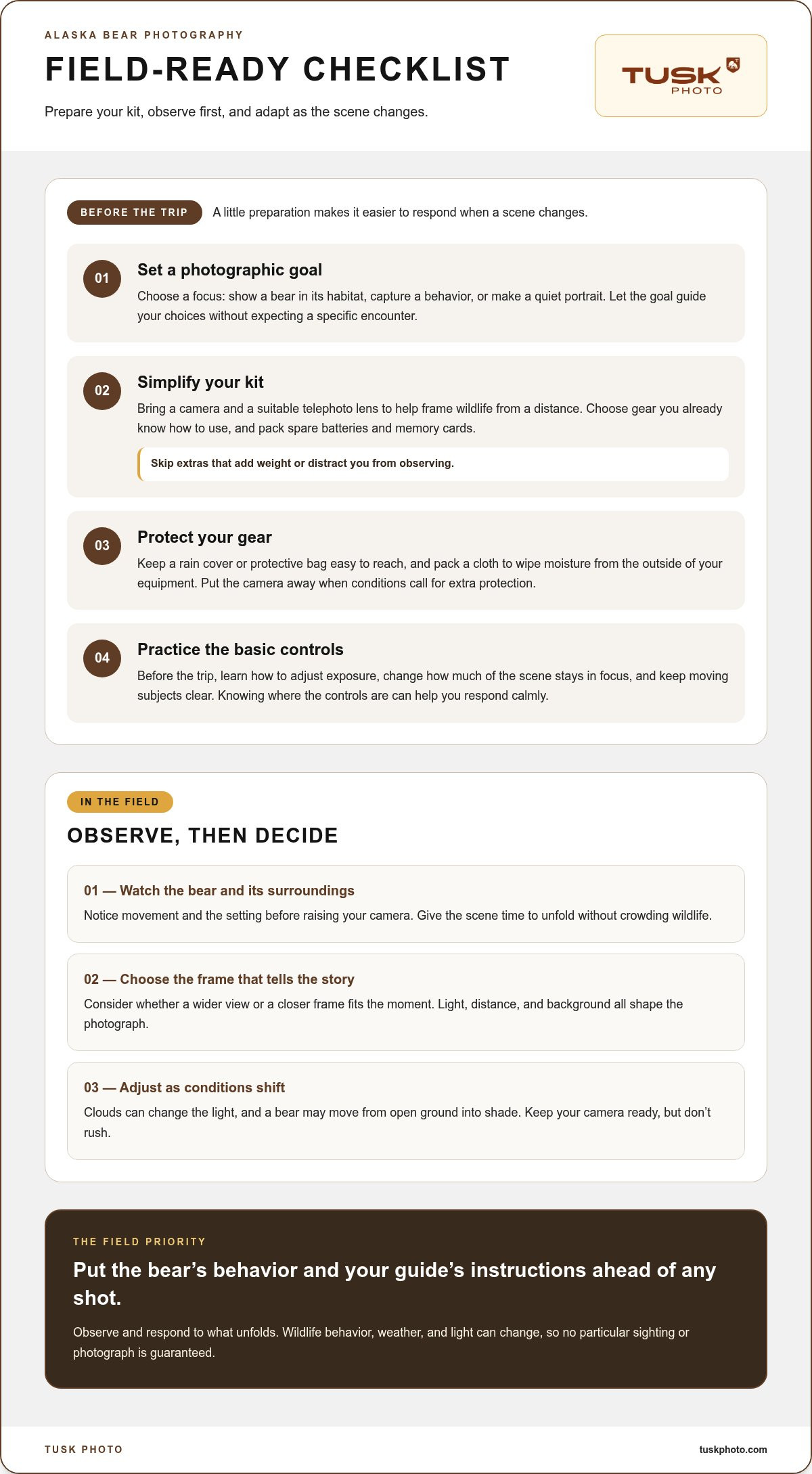
A little preparation makes it easier to respond when a scene changes. Before an Alaska bear viewing photography tour, use this simple sequence:
Choose a focus, such as showing a bear in its habitat, capturing a particular behavior, or making a quiet portrait. A clear aim helps guide your choices without making you expect a specific encounter.
A camera and suitable telephoto lens can help you frame wildlife from a distance. Bring equipment you already know how to use, plus spare batteries and memory cards. Avoid extras that add weight or distract you from observing.
Keep a rain cover or protective bag easy to reach, and pack a cloth for wiping moisture from the outside of your equipment. Put the camera away when conditions call for extra protection.
Notice the bear’s movement and surroundings first. Then decide whether a wider view or a closer frame better tells the story.
Prioritize the bear’s behavior and your guide’s instructions over any shot.
Practice your camera’s basic controls before the trip. Learn how to adjust exposure when a scene gets brighter or darker, change how much of the scene stays in focus, and keep moving subjects clear. These adjustments can help as clouds shift or a bear moves from open ground into shade. You don’t need to master every setting; knowing where to find the controls makes it easier to respond calmly.
Keep your camera ready, but don’t rush. Watch the surroundings as well as the bear, and give the scene time to unfold without crowding wildlife. An experienced photography guide can help you make considered choices as conditions change. Guided wildlife photography tours also give you support in the field while keeping observation at the center of the experience.
Start with the kind of experience you want, then choose a format that fits how you prefer to plan. Would you rather build your travel around a set departure, or shape the journey around your photographic interests? For an Alaska bear viewing photography tour, it also helps to decide what you want to learn, such as composing in changing light or making more deliberate images of wildlife in its habitat.
Scheduled tours have planned departure dates and are led by experienced photography guides. They suit photographers who want a defined framework for their trip. Explore the scheduled photography tours to see this format. Tailor-made journeys are designed around your preferences, including a focus on particular wildlife or regions. On-demand expeditions offer a flexible format shaped around your requests and timing.
When choosing, consider how much structure you want and what you hope to photograph. Someone focused on wildlife portraits may plan differently from a photographer who wants to practice environmental compositions or build confidence in the field. Share your experience level and learning goals with your guide so they can support thoughtful decisions as conditions change.
Guides can help you interpret the setting and make considered choices in the field, but bears are wild animals. Sightings, behavior, weather, and light can’t be guaranteed. Plan to observe and respond rather than arrive with a fixed list of shots. The strongest image may come from a moment you couldn’t have planned.
An Alaska bear viewing photography tour is an invitation to slow down, pay attention, and make pictures in response to the wild world around you. Let your interests guide your planning, but leave room for the unexpected. A quiet moment of observation can be just as meaningful as the image you came hoping to make.
Tusk Photo leads wildlife photography expeditions in scheduled, tailor-made, and on-demand formats, with experienced photography guides supporting you in the field. Explore Tusk Photo’s wildlife photography journeys and choose the approach that fits your goals. Start planning your next photography journey with Tusk Photo.
No. Bears are wild, and their movements, behavior, and visibility can change with conditions. A guide can help you make thoughtful use of the opportunities that arise, but no sighting or photograph can be promised. If a bear stays out of view or far away, use the time to observe the landscape and notice how the scene changes.
Yes. You don’t need years of photography experience to enjoy a wildlife expedition. Before you go, practice adjusting focus and exposure, then review your pictures to see what worked. In the field, take time to observe before raising your camera. Experienced photography guides can support your learning, and a flexible mindset helps when the day doesn’t unfold as expected.
Dress for your destination and the conditions expected during your travel dates. Layers make it easier to adjust as the temperature or weather shifts, and comfortable footwear helps during time outdoors. Keep rain protection easy to reach. Follow your guide’s instructions so clothing and comfort don’t distract from safe wildlife viewing.
Changing weather can affect comfort, visibility, and the look of a scene, so be ready to adjust your plans. Protect your camera when conditions call for it, and follow your guide’s direction about where and when to pause or move. Shifting light can create a different mood, but wildlife activity and the day’s opportunities remain unpredictable.


