
7 Simple Landscape Photography Tips for Your 2026 Safari
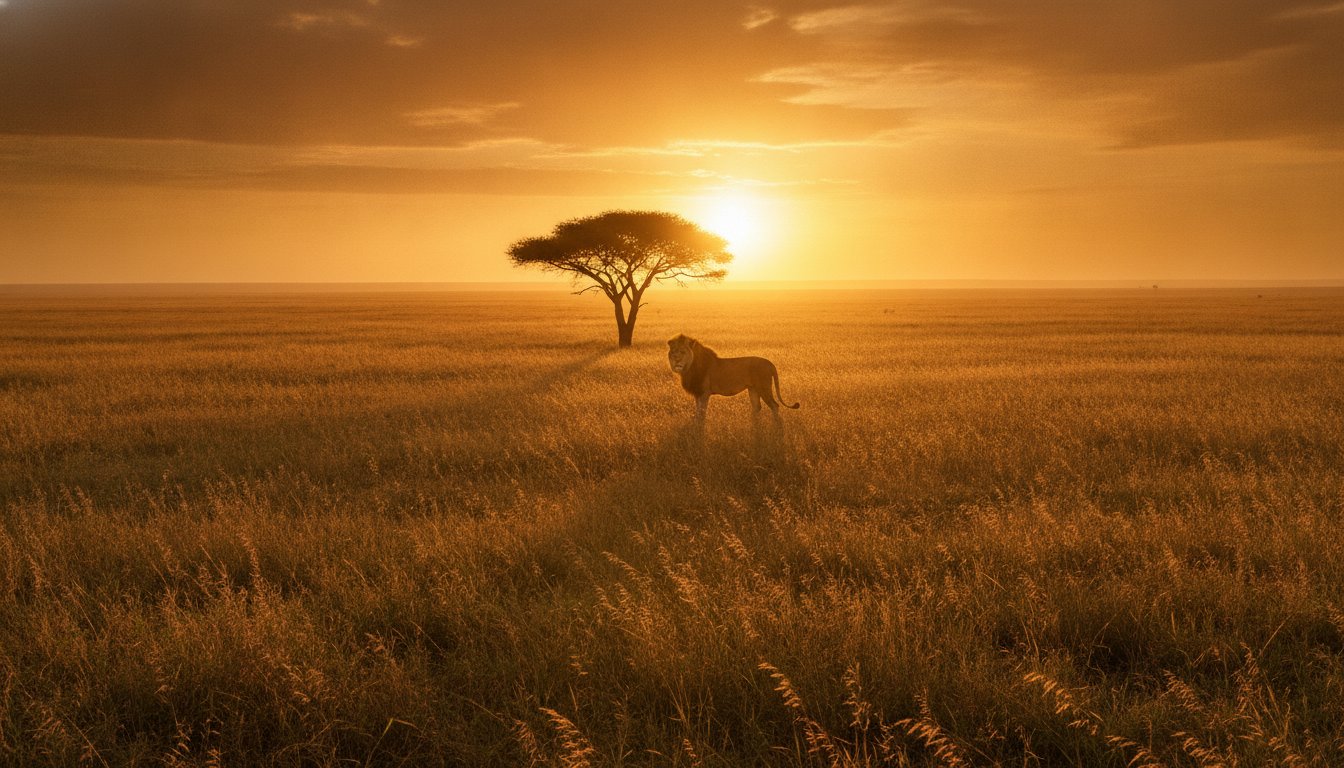

Have you ever looked at a photo of a lion and felt like the magic was missing? It's a common struggle. You spend your morning hunting for the "Big Five," but when you look at your screen, the images feel small and flat compared to the vast plains in front of you. We know you want to capture the "big picture," and incorporating landscapes in wildlife photography is the best way to do it. It's easy to get so caught up in an animal's face that you miss the incredible story the background is trying to tell.
This guide offers seven friendly tips to help you master the scale of Africa for your 2026 safari. We'll show you how to use the light with confidence and share simple tricks for shooting from a moving vehicle. These steps will turn your scenery into professional art, ensuring your portfolio feels as grand as the journey itself. If you're looking for inspiration on how to elevate your nature shots to a gallery standard, find out more about the world of fine art photography.
Capturing the wild is about more than just a close-up of a leopard's spots. True safari photography focuses on showing the world that animal calls home. By incorporating landscapes in wildlife photography, you give your viewers a sense of scale and mood that a tight portrait simply can't match. It’s about telling the full story of the savanna and its inhabitants. Our Tusk Photo guides are masters at finding these wide-angle moments where the animal and the environment meet perfectly.
Timing is everything when you want to avoid flat, boring images. The harsh midday sun is often your biggest hurdle because it creates dark, messy shadows and washes out the natural colors of the bush. Instead, focus your energy on the early mornings. This is when the light is soft and the air is clear. Don't be afraid of "bad" weather either. Look for drama in the sky; an approaching storm or a thick cloud of dust kicked up by a passing herd adds incredible character to your work.
The Golden Hour is that magical window of time just after the sun rises or right before it sets. It wraps the landscape in a warm, honey-colored glow that instantly makes your photos look professional. This light is perfect for showing off the texture of the long grass or the iconic shape of a lone acacia tree. When you are incorporating landscapes in wildlife photography during these hours, the world looks completely transformed.
Use this low light to your advantage by looking for long shadows. These shadows add depth and help your subject stand out against the vast background. If you are looking for Wildlife Photography Tips for Beginners, our expert-led trips are the perfect place to start. Whether you choose a group trip or a tailor made tour, we'll make sure you're in the right place when the light turns to gold for your 2026 safari.
Great photos often start with a simple grid. Imagine your screen is divided into nine equal squares by two horizontal and two vertical lines. Instead of putting your subject or the horizon right in the middle, try placing them on one of those lines. This "Rule of Thirds" instantly makes your shot feel more balanced and professional. It's an easy way of incorporating landscapes in wildlife photography because it allows the sky or the plains to share the spotlight with the animals.
Look for "leading lines" to guide the eye of anyone looking at your work. A winding river or a dusty elephant path can pull the viewer straight into the heart of the savanna. Don't forget to keep your foreground interesting. Including a lone tree or a colorful rock in the front of your shot adds layers and gives the image a sense of depth. This makes the viewer feel like they are standing right there with you in the wild. These composition principles are universal and work just as well when capturing the historic charm and rugged peaks at Nordpå Fjellhotell.
Sometimes, the best way to show how grand Africa is involves making your subject look small. A tiny elephant walking through a massive, sun-drenched valley shows just how magnificent the wilderness really is. Photographers call these environmental portraits. Instead of always zooming in for a tight headshot, try zooming out to show the animal in its vast home. This perspective captures the visceral experience of nature that close-ups often miss.
Waiting for these perfect moments takes a bit of patience. A tailor-made photography safari gives you the time to stay at a sighting until the light and the animal's position are just right. You won't feel rushed by a group, which is key for incorporating landscapes in wildlife photography successfully. If you're ready to start planning, check our 2026 tour dates to find the perfect window for your journey.
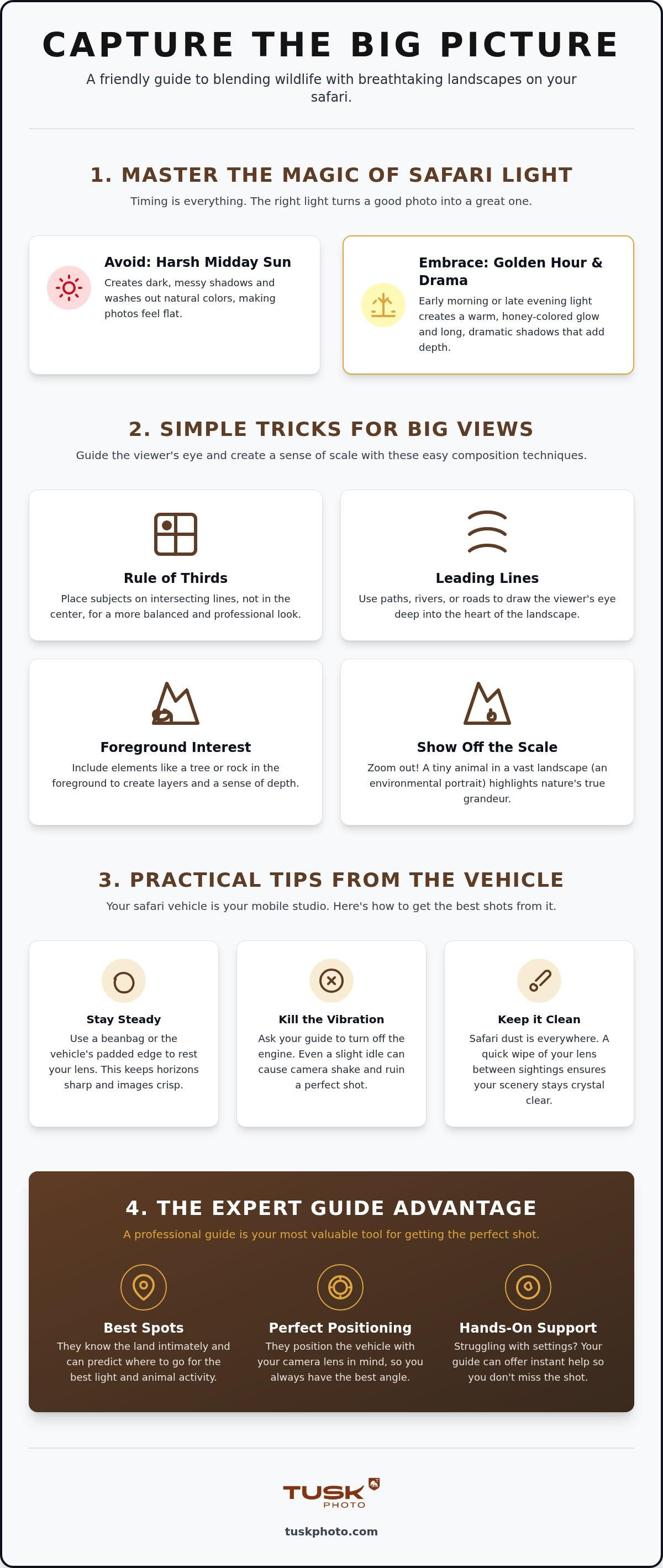
Most landscape shots happen on solid ground, but on safari, your vehicle is your tripod. Since you can't easily set up a bulky stand in a cramped seat, you need other ways to stay steady. Use a beanbag or even the padded edge of the vehicle to rest your lens. This simple trick makes a huge difference when you are incorporating landscapes in wildlife photography, as it keeps your horizon lines sharp and your images crisp.
Engine vibration is a silent killer of good photos. Even a small idle can cause camera shake that ruins a beautiful long-distance view. Don't be shy about asking your guide to turn off the engine once you've found the perfect spot. Also, keep your cleaning kit handy. Safari dust is constant in 2026, and a tiny smudge on your lens can turn a stunning sunset into a blurry mess. A quick wipe between sightings ensures your scenery looks as clear as it did in person.
A professional guide is your best tool for getting the shot. They know the land intimately and can predict exactly where to park for the best light. On our scheduled photography tours, we position the vehicle specifically with your camera lens in mind. You won't have to fight for a window or a better angle because the entire trip is built for your craft.
Booking through Tusk Photo tours means you have a mentor right beside you. If you're struggling with your settings in the heat of the moment, your guide can offer hands-on help. This support is vital for successfully incorporating landscapes in wildlife photography while the action is unfolding. It ensures you come home with a portfolio that truly captures the scale and spirit of the wild.
Capturing the savanna is about more than just finding an animal. It's about seeing the world through its eyes. By using the soft morning light and simple framing tricks, you'll create photos that feel both alive and grand. Remember that incorporating landscapes in wildlife photography is the secret to showing the true scale of these wild places. Whether you're steadying your lens on a beanbag or zooming out for a wide view, these small changes make a massive impact on your final gallery.
Our small group expeditions are led by world-class professional photography hosts who help you find the best creative angles. You'll enjoy access to the world’s most iconic wildlife destinations with a team that puts your craft first. Explore our upcoming 2026 photography tour dates and join us in the field! We're excited to help you turn your safari dreams into a professional portfolio.
A wide-angle lens like a 24-70mm is usually the best choice for capturing big African skies. You don't need a massive lens for landscapes. If you only have one camera body, a versatile zoom lens works great too. It lets you quickly switch from a close-up of a lion to a wide shot of the whole valley without missing a beat.
You actually don't need a tripod inside a safari vehicle. They are often too bulky and difficult to set up in a small space. Instead, we recommend using a beanbag or resting your camera on the vehicle's padded edge. These simple tools keep your camera steady for sharp shots while giving you the freedom to move quickly when an animal appears.
To keep your sunsets bright, try focusing your camera on the colorful part of the sky rather than the dark ground. If the land looks too black, you can adjust your brightness settings to find a balance. Incorporating landscapes in wildlife photography during sunset is also a great time to create silhouettes by placing an animal between you and the glowing sun.
Yes, modern phones are surprisingly good for capturing the vastness of the savanna. Since phones naturally have wide lenses, they are perfect for incorporating landscapes in wildlife photography when you want a quick shot of the view. Just remember to hold your phone steady and avoid zooming in with your fingers. This helps prevent your beautiful scenery from looking blurry or grainy.


