
3 factors for choosing an African photo safari operator
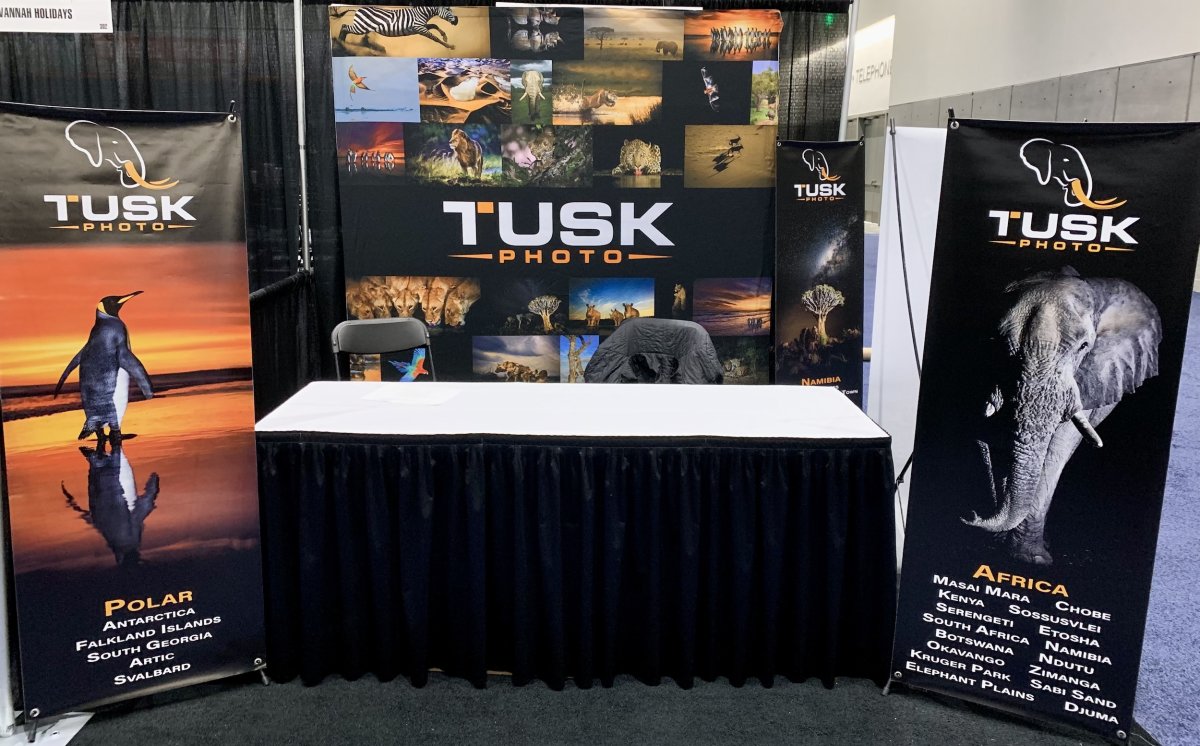

The best choice isn’t necessarily the biggest name or the most luxurious camp. To decide what is the best photo safari company for your trip, compare how well its photographic approach, specialist focus, and group format match the images you want to capture. These factors can shape your time in the field as much as the destination.
It’s natural to focus first on wildlife and scenery. But the right setting matters most when the tour gives you the space and support to photograph it well. A vehicle suited to photographers, guides with a strong photographic focus, and a group size that works for your style can all make a difference.
This guide explains how to weigh each factor and spot the details that matter when comparing African photo safari operators. You’ll come away with a clearer way to match a safari to your photography goals, whether you’re building confidence behind the camera or refining an established practice.
For an African photo safari, compare the vehicle and viewing setup before focusing on camera gear. Purpose-built vehicles can give photographers clearer sightlines, room to position equipment, and a steadier place to work during wildlife drives. Open-sided cars offer an unobstructed view, while enclosed vehicles may suit some routes or conditions better.
Ask how many photographers share each vehicle. A photographic safari vehicle may limit the group to three or four photographers, allowing more room to move a long lens and reducing competition for the same angle. Also compare the guest-to-vehicle ratio across the whole tour: a small vehicle group does not necessarily mean a small overall group.
Boats and hides offer different photographic opportunities. A boat can bring you closer to wildlife along a river or lake, while an underground hide can provide a low, quiet viewpoint near water. Match the setup to the species and images you hope to capture, rather than relying on the vehicle description alone.
No single operator is the best fit for every African safari. Compare guest ratings alongside practical details, such as photographer numbers per vehicle, vehicle type, and access to hides or boats.
Beginners may benefit from guided tours that help them make camera decisions in the field. Experienced photographers may prefer specialist outings and setups that support their subjects and working pace.
Cancellation, deposit, and refund terms vary by operator and itinerary. Read the booking terms carefully for payment dates and cancellation conditions before committing.
Visa and vaccination requirements depend on the destination and your circumstances; travel insurance terms also vary. Plan for these separately for each destination on your safari.
A dedicated photographic operator builds the trip around making images, not simply visiting wildlife areas. That focus can shape the pace of each outing, the guidance available in the field, and the time you have to work on composition. A leopard resting in shade, for example, calls for a different approach from elephants crossing open grassland.
Light matters as much as location. Sunrise and sunset often bring softer, warmer light. In a national park, that can help reveal texture in an animal’s coat and detail in the surrounding landscape. A specialist itinerary also considers how travel between areas affects your time with the camera.
Equipment guidance is another useful sign of photographic focus. Safari companies can advise travelers about the imaging equipment suited to a trip. Some also offer access to a rental super-telephoto lens, which can help photographers who don’t own one. Compare that support with your subjects, lens choices, and experience level before packing.
Look for guidance suited to both beginners and experienced photographers. A beginner may value help with exposure and focus, while an experienced photographer may want more time to refine framing or capture animal behavior. The best fit is an operator whose photographic approach matches your goals, whether you’re building confidence or planning a focused African adventure.
Before choosing, compare the itinerary’s balance of travel, time in wildlife areas, and photographic guidance. These details help show whether a tour is built around making images or treats photography as one part of a broader safari.
Ask what photographic guidance is available if you need help preparing for the trip.
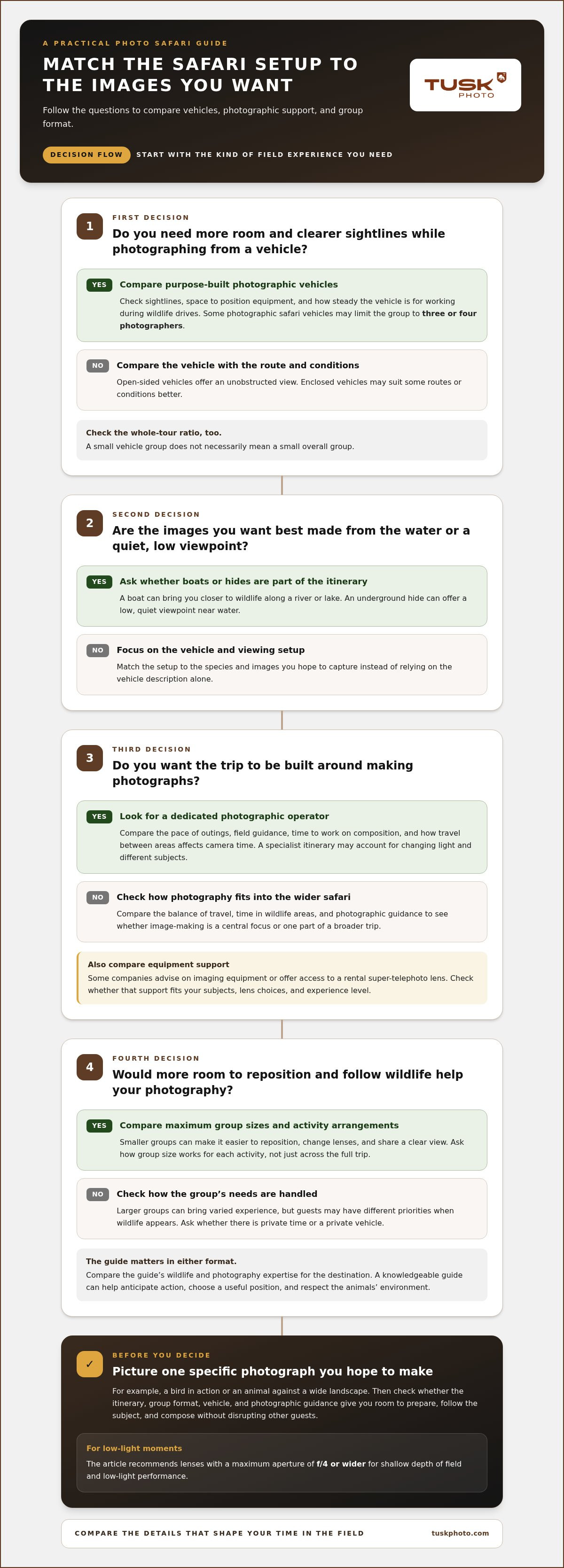
Group size affects how easily photographers can respond when wildlife moves. A smaller group can make it easier to reposition, change lenses, and share a clear view. Larger groups may bring varied experience, but passengers can have different priorities when a leopard appears or elephants cross the landscape.
Compare the maximum group size with the destinations and the guides’ expertise. In Tanzania, for example, a route through a national park may involve long drives between habitats. A guide who understands wildlife behavior and photography can help the group anticipate action, choose a useful position, and respect the animals’ environment.
Ask how group size works during each activity, not just across the whole trip. A tour may use different arrangements for a game drive, walking experience, or landscape stop. Check whether the itinerary includes private time or a private vehicle, as these can affect how freely you work with your subjects.
Compare operators by their destinations, maximum group sizes, and guides’ expertise in each setting. Review the itinerary, then consider whether its pace and photographic support suit your experience and wildlife photography goals.
Before booking, picture a specific moment you hope to capture, such as a bird in action or an animal against a wide landscape. Then consider whether the group format gives you room to prepare, follow the subject, and compose without disrupting other guests. This practical test can reveal more than a general promise of small groups.
For low-light moments, lenses with a maximum aperture of f/4 or wider are recommended for shallow depth of field and low-light performance, helping photographers prepare without relying on group arrangements alone.
Tusk Photo’s Scheduled Photo Safaris suit photographers looking for a planned wildlife journey guided by experienced photographers. The tours are designed to offer photographic opportunities for beginners and seasoned professionals, making them a practical choice if you value a set itinerary and shared expedition.
If you have a specific destination or photographic goal in mind, Tusk Photo’s Custom Tours and On-Demand Tours offer other ways to shape your journey. Choose the format that best matches how closely you want the itinerary to follow your own interests.
Explore Tusk Photo’s scheduled tours to find a photographic journey that fits your plans.
Your next step is to decide what kind of experience will help you grow as a wildlife photographer. If you’re wondering what is the best photo safari company for you, start by picturing the journey you want, from a set itinerary to one shaped around your interests.
Tusk Photo offers Scheduled Photo Safaris, Custom Tours, and On-Demand Tours. Consider your preferred destinations and how much flexibility you want. That will help you choose a trip suited to your plans and photography goals.
Ready to take the next step? Contact Tusk Photo about your safari and start planning your wildlife photography journey.
The best choice depends on your destination, photography goals, and preferred trip style. Tusk Photo specializes in wildlife photography expeditions, making it a relevant option if you want a journey centered on making images. Match an itinerary to the animals and landscapes you hope to photograph, then consider whether its pace suits your travel plans.
Tusk Photo offers wildlife photography expeditions in African destinations including Tanzania, Namibia, Botswana, and Kenya. If you hope to photograph leopards, for example, look for an itinerary focused on that subject; if you’re drawn to open landscapes, consider a different destination. Compare each tour’s itinerary and photographic focus with the images you want to bring home.
There is no single average cost for a photo safari that includes flights and park fees. Total costs depend on the destination, travel dates, trip length, transport, accommodation, airfare, and which park fees are included in the tour price. Compare the itinerary’s stated inclusions and exclusions, then budget separately for any flights, fees, or other travel costs listed outside the package.
Tusk Photo offers Scheduled Photo Safaris designed for beginners and seasoned professionals. Custom Tours and On-Demand Tours provide other ways to shape a trip around your interests.


